
How Is the Inheritance Tax on My Estate Paid?
Most of my money is in investments, and most of my beneficiaries will face the inheritance tax when I die.

Most of my money is in investments, and most of my beneficiaries will face the inheritance tax when I die.

Social Security benefits are one of the items that fall through the cracks in many estate plans.

One of the biggest challenges for anyone administering an estate is how to distribute what are called its tangible items. Unlike other property which can be easily sold, turned into cash and divided equally, tangible property is unique and often can’t be equally split. Its value also often can’t be measured by what it could be sold for. A family photo album may have no monetary value, for instance, but great sentimental significance.

You might not be able to spend all the money in your 401(k) plan before you die. If that happens, your retirement savings will pass to the person you name as the beneficiary of the account. The information on your 401(k) beneficiary form typically supersedes what is written in your will. Therefore, it is important to keep this form up to date for all your retirement and investment accounts.

Each year, senior citizens lose billions of dollars to financial fraud, with the loss to individual victims averaging tens of thousands of dollars.
The death care industry — yep, it’s got its own industry moniker — is an estimated $20 billion business. Service Corporation International, a publicly traded company that operates 1,475 funeral homes and 483 cemeteries in 44 states, pulled in more than $3.2 billion in revenue in the past 12 months.
Anderson Cooper’s newborn son Wyatt started life with every material advantage and a lot of big questions. Call it the Vanderbilt Curse.

It can be hard to move through your daily life after someone you love dies. It may be even harder to embark on the complex tasks required to put their financial affairs in order. However, you can’t afford to put that off.

Too many people mistakenly believe that to have a need for estate planning, you must be old and wealthy. Nothing could be farther from the truth. Once you are a mature adult, independent, and income-producing, it is time to assume the responsibilities of preparing for your future. High on the list is preparing an estate plan with a clear understanding that your plan will be revised to adapt to changing circumstances.
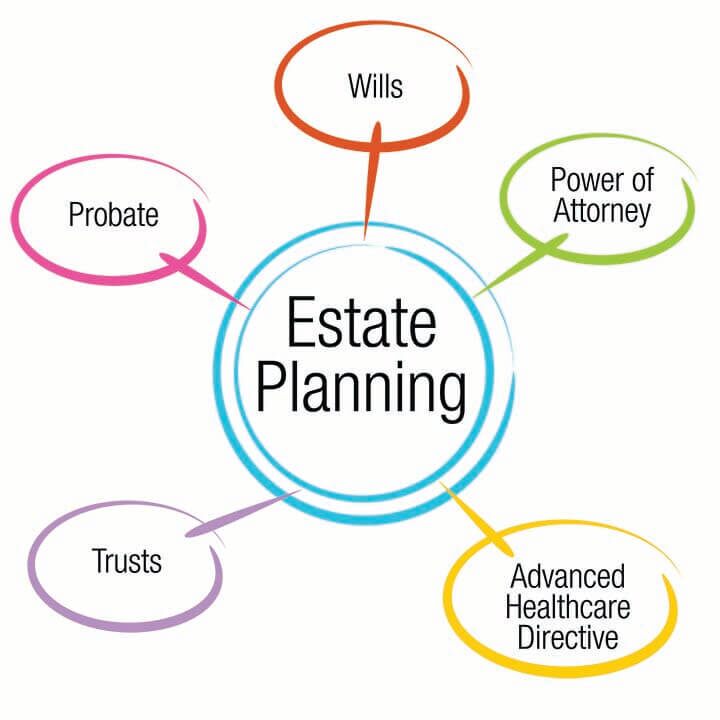
Without an estate plan in place, clients will be reliant on state laws and probate courts to appoint individuals who will be responsible for financial affairs and health-care decisions, in the case of illness and ultimately the transfer of assets upon death.